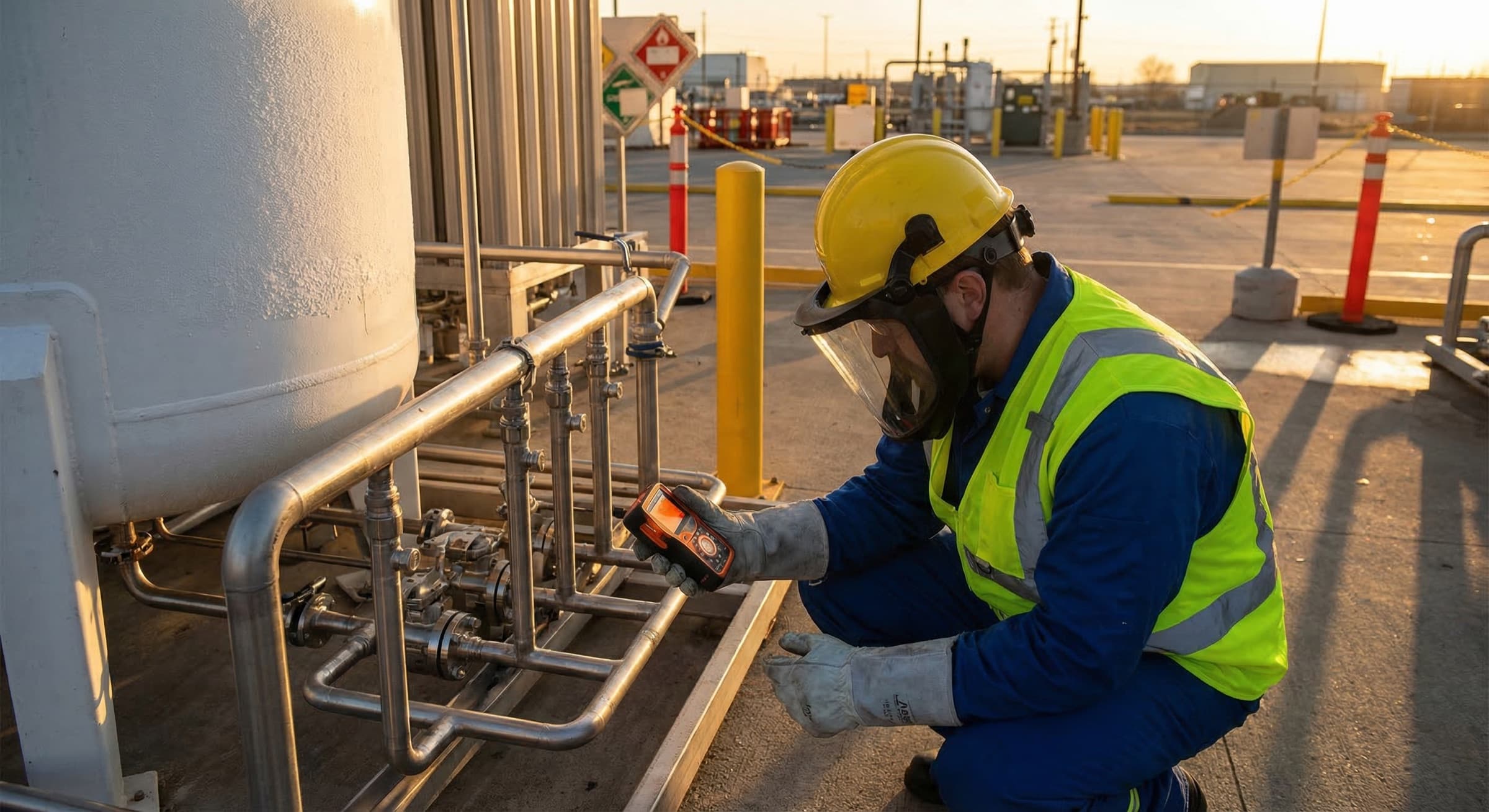
Safety & Compliance

Safety & Regulatory Compliance

Every cryogenic decommissioning project operates under rigorous Zero-Incident safety protocols and comprehensive federal, state, and local regulatory compliance.

// Key Hazards & Capabilities

  • OSHA HAZWOPER (29 CFR 1910.120) certified personnel on every project
  • Zero-incident protocols: HAZOP studies, JSA, LOTO, and Stop Work Authority
  • Full compliance documentation: NFPA 55, CGA P-1, EPA RCRA, DOT 49 CFR
Regulatory Framework

Federal & Industry
Standards

OSHA 29 CFR 1910.120

HAZWOPER

All personnel engaged in clean-up of hazardous substances must undergo extensive, formalized training and continuous medical surveillance.

OSHA 29 CFR 1910.147

LOTO

Physical isolation and locking of electrical, mechanical, hydraulic, and pneumatic energy sources before any worker dismantles gas equipment.

EPA RCRA

Resource Conservation & Recovery Act

Removed hazardous materials must be accurately characterized, manifested, transported, and disposed of according to strict guidelines. Formal closure plans signed by an independent Professional Engineer required.

EPA CERCLA

Environmental Response

Environmental response, compensation, and liability for facility closures.

EPA GHGRP

Greenhouse Gas Reporting

Controlled management of methane venting during pipeline and tank blowdowns.

DOT / PHMSA — 49 CFR Parts 171-180

Hazardous Materials Transport

Transport of decommissioned tanks and residual hazardous fluids on public roadways: properly placarded trailers, hazardous materials manifests, vetted routing.

NFPA 55

Compressed Gases & Cryogenic Fluids

Storage, Use, and Handling of Compressed Gases and Cryogenic Fluids.

NFPA 59A

LNG Standard

Production, storage, and handling of LNG; purging procedures.

NFPA 52

Vehicular Gaseous Fuel

Vehicular Gaseous Fuel Systems Code; CNG end-of-life destruction.

CGA P-1

Compressed Gas Handling

Safe Handling of Compressed Gases in Containers.

EIGA Doc 154

Gas Vent Safety

Safe Location of Oxygen, Nitrogen, and Argon Gas Vents.

Certifications

Certified Expertise

Certified Hazardous Materials Manager (CHMM)

Expert-level understanding of EPA and DOT regulations concerning hazardous waste classification, emergency response, and site remediation management.

Certified Safety Professional (CSP)

Global mastery in hazard identification, safety auditing, and complex risk management.

OSHA 40-Hour HAZWOPER

All field personnel, with annual 8-hour refreshers. Supervisors hold additional 8 hours of specialized management training.

Zero-Incident Protocols

Safety Is Not
Negotiable.

Decommissioning HAZOP

Analytical framework evaluating the entire dismantling process, identifying catastrophic failure points (trapped pressure in cryogenic valves, structural collapse during heavy lifts) before physical work begins.

Job Safety Analysis (JSA)

Daily, mandatory protocol: crews break down specific tasks, identify localized hazards (shifting center of gravity, pinch points, static electricity), establish immediate mitigation strategies.

Lockout/Tagout (LOTO)

Physical padlocks, specialized multi-worker hasps, visual warning tags ensuring zero pneumatic, hydraulic, or electrical energy reaches the work area.

Stop Work Authority (SWA)

Any employee possesses the absolute mandate to halt operations immediately if unsafe conditions are detected. No disciplinary action can result from executing SWA.

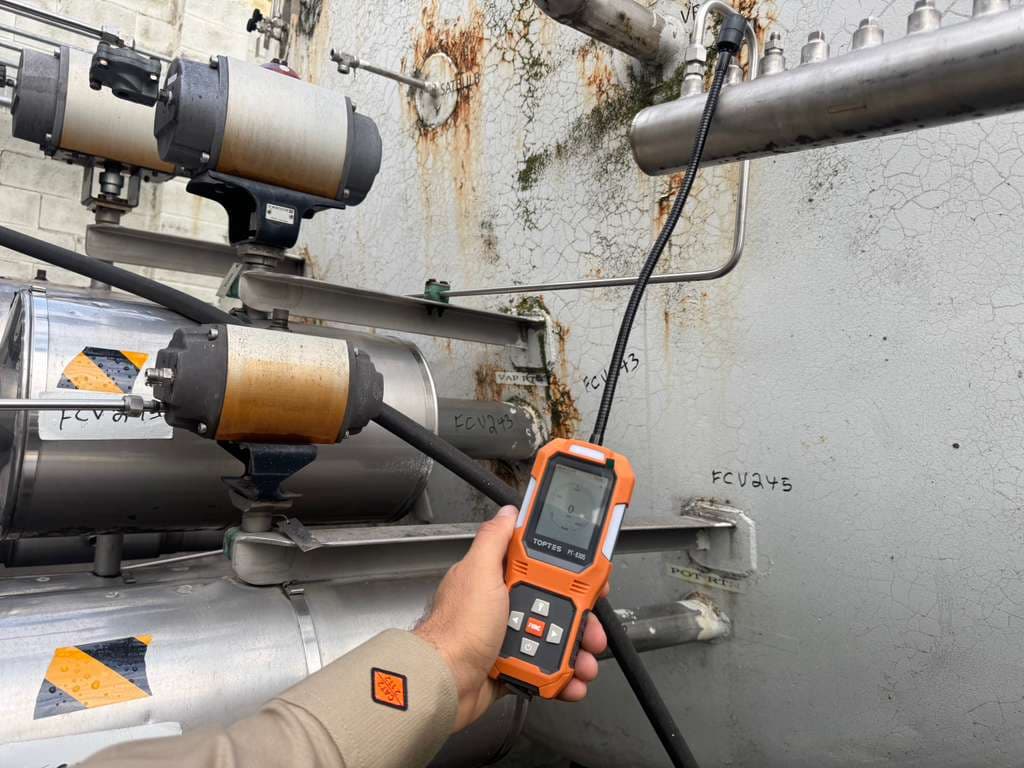
Technician performing atmospheric gas detection monitoring near cryogenic tank valves using a handheld instrument as part of on-site safety protocols

Questions About Compliance?

Our CHMM and CSP-certified team navigates the regulatory framework so you don't have to.